BitMart exchange is shutting down and will fully cease operations on January 31, 2027

The exchange is shutting down. Make sure to withdraw your funds in time.
ATTENTION! BitMart exchange has announced its capitulation and will close on January 31, 2027. Deposits and registrations have been blocked since July 26, 2026, amid a 60% crash in the BMX token, the dismissal of the CEO by shadow management, and the shutdown of competing platforms AscendEX and BitMEX due to regulatory pressure on KYC/AML grounds.
All spot and futures positions of 13 million traders will be forcibly closed at the mark price on August 26, 2026. Withdrawing remaining funds before the final deadline will require undergoing re‑KYC, manual transaction auditing, and mandatory documentary proof of the origin of digital assets.
Why did the exchange collapse? Who is behind it?
The official version from top management reads: “changes in operating conditions, market environment, and a revision of the long‑term strategy.”
However, independent analysts and on‑chain metrics highlight the real markers of the collapse.
- Mid‑tier offshore exchanges have found it virtually impossible to survive in the grip of stringent KYC/AML requirements and the Travel Rule. Teams find it easier to self‑liquidate than to pay millions in fines.
- Smaller platforms are outright losing the battle for volume to giants (Binance, OKX) and decentralized protocols (DEX). Former Binance CEO Changpeng Zhao has already reacted to BitMart's scam signals with the phrase “Hard times are coming again.”
- The start of liquidation is accompanied by a major scandal. The global CEO publicly stated that he was shown the door two days before the official announcement, and he heard about the exchange's closure from public channels along with ordinary traders. In fact, the switch was pulled by shadow beneficiaries and founder Sheldon Xia.
Below is the archive of the article:
You will learn about the BitMart exchange - types of trading, copy trading, staking and lending conditions, as well as their rewards center - Launchpad and PowerDrop. We will also look at the exchange's security system, its bank card, and token.
What is BitMart and what is its legal status?
BitMart is a cryptocurrency exchange founded in March 2017 by Sheldon Xia, a Chinese blockchain entrepreneur. He launched this exchange right after completing his master's degree together with his friends.

What is the legal status?
The exchange is officially registered in the Cayman Islands, but does not have licenses in key jurisdictions like the EU, UK, or Hong Kong. An application for a VASP license in Hong Kong was withdrawn in 2025 due to failure to meet the regulator's strict requirements.
In summary, BitMart is licensed only in a limited number of countries (USA, Lithuania, Cayman Islands). In major financial centers (UK, Hong Kong), it either has no license or a partial/revoked one.
Is it a major exchange?
According to CoinMarketCap, BitMart ranks among the top 16 cryptocurrency exchanges. The platform serves over 10–12 million users in 200+ countries and regions, providing access to a list of 1700+ cryptocurrencies.
The exchange offers spot and margin trading, as well as futures with leverage up to 200x.
Are there passive income opportunities here?
In terms of passive income, it offers a standard set of tools for exchanges.
| Copy Trading | Auto-copying trades of successful traders. Suitable for beginners who do not wish to trade independently. |
| Passive Income (Earn) |
|
| Additional Opportunities |
|
The exchange also has its own prepaid Visa/Mastercard and its own BMX token, which provides fee discounts of up to 25–40%.
Let's move on to practice. To do this, we will create an account and look at the trading terminal.
How to register?
To register, you need to enter your email, password, tick the box, and click Sign Up.
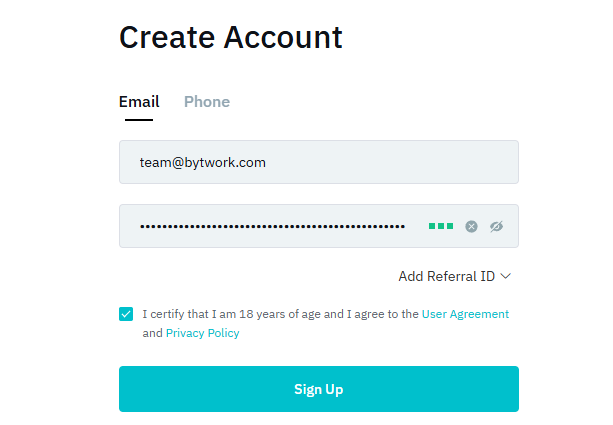
Then, an activation code will be sent to your email, which you need to enter on the registration page to confirm your email and complete the process.
Verification
After registration, you can start trading on the exchange immediately. Verification is not mandatory; however, it grants the right to issue a card and use margin trading.
Without verification, you can withdraw up to 20,000 USDT daily. This is quite sufficient to start with.
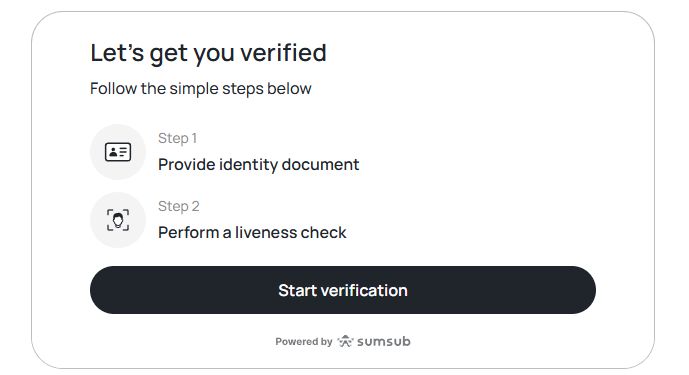
For Level 2 verification, you need to provide a photo of your ID (passport or driver's license) and pass a facial verification via a selfie.
Account Security
To increase security and enable fund withdrawals, you must enable two-factor authentication in the Security section by clicking Enable next to Google Authenticator.

You will need to scan the QR code with your smartphone in the Google Authenticator app and enter the key on the exchange.

How secure is the exchange itself? It is known that it actively engages security experts to find code vulnerabilities through a Bug Bounty program. However, the exchange was hacked in 2021, and we will analyze this incident below.
Now let's figure out how to top up your balance on BitMart most profitably.
How to deposit funds?
To deposit, go to Assets and Deposit. The cheapest way is to deposit USDT cryptocurrency via the TRC20 network. It's best to do this through the exchanger monitoring service BestChange.
On the deposit page, select USDT and the TRC20 network to get the address.

Topping up BitMart involves depositing cryptocurrency or buying crypto with fiat via "Buy Crypto" options like credit/debit card, PayPal, or P2P trading. Complete KYC verification first for fiat methods, as it's often required. Always match networks (e.g., TRC20) to avoid lost funds.
The second method is to top up your account through the P2P platform within the exchange, where you buy cryptocurrency directly from other users. However, P2P trading is underdeveloped here. We see only one offer and an unfavorable rate.

The third method is to buy directly with a credit/debit card, purchasing USDT for USD in the Credit/Debit Card section.

However, this requires Level 2 verification, and the rate is also unfavorable. Therefore, we recommend the first method.
After depositing, you can start earning. There are many methods here. But before trading, it's important to understand the fee system.
What are the fees and types of trading here?
Spot trading fees vary depending on trading conditions:

- 0.1% for basic exchanges.
- Using the exchange's own token (BMX) to pay fees provides a significant discount - from 25% to 40%.
- There are also 6 loyalty levels; the higher the trading volume or amount of assets held, the lower the fee (as low as 0.014/0.030%)
In summary, VIP levels and holding the BMX token reduce the fee to 0.02% for spot and 0.014% / 0.03% for futures.
Trading is divided into spot (simplest trading at current prices), futures (trading contracts with leverage up to 200x), and margin trading with leverage up to 5x.
There is also a demo mode to test all functions.
How to use the trading interface?
The trading interface is standard. You have access to two types of interface: simplified (for beginners) and advanced (for experienced traders). It is switched via the gear menu at the top.

At the top left, select the desired trading pair, for example, Bitcoin. Below is the price chart, where you can immediately mark an entry point, as well as take-profit and stop-loss levels.

On the right side, the order book is displayed. Further down is a list of all open positions with details for each trade - for example, a Bitcoin long with 5x leverage.
At the bottom, you will see the position size, entry price, current price, liquidation price, and margin, which represents your own funds in the trade.

Here you can also see the current unrealized and realized profit or loss (PNL), including profits taken along the way and order fees. From here, you can also review, edit, or close the trade again, managing take-profit and stop-loss orders.
Finally, the block on the right is for opening new trades. Here you set the leverage, select the order type, check the available balance on your account, and specify the position size.

If desired, immediately add a take-profit or stop-loss by entering prices to see potential profit or loss, and then proceed to open a long or short position.
Spot Trading Overview
In the spot trading section, you can buy and sell various cryptocurrencies using a convenient platform with a chart, order book, and form for creating orders.

Charts are integrated with the TradingView service, providing access to professional indicators and drawing tools.
You can choose market or limit orders for immediate (at current rate) or delayed trades at your specified price.
For spot trading, the exchange offers over 1700 different coins. This significantly exceeds the offerings of giants like Binance or Coinbase!
BitMart also has a section for DEX trading with a Web3 wallet on Solana, where new promising cryptocurrencies often appear.
Note that the daily spot turnover can exceed 2.5 billion dollars, ensuring high liquidity and minimal slippage for large trades.
Margin Trading Overview
Margin trading with leverage is available, allowing you to increase trade size and potential profitability, but also increasing the risk of losses, so trade carefully.
Using leverage allows you to earn 2–3 times more on the same market moves as on spot. This is especially effective in a rising market or during bounces after corrections (e.g., when Bitcoin falls to certain levels).
Here, the Risk Ratio coefficient will show how close you are to liquidation.

However, remember that when using leverage, losses also increase proportionally to the leverage size. If the price moves against your position, there is a risk of forced trade closure (liquidation) and loss of your collateral.
How to track liquidation heatmaps is covered in this guide. And how to analyze the market via CoinGlass is covered in this one.
Futures Trading Overview
Separately, there is futures trading, where you can profit from the rise (long) or fall (short) of an asset's price, also using leverage. It's important to remember that the higher the leverage, the higher the potential profit, but also the risk of losses, up to position liquidation. For example, there's insane 200x leverage here, multiplying the chances of position liquidation.

A strict risk management strategy is required to open such trades. Cryptocurrency is risky by itself, and with such leverage levels, it becomes a real hell!
But you can choose lower leverage. To start trading, you need to transfer funds from your spot wallet to your futures wallet. The exchange offers 2 main contract types:
USDM-M- uses the stablecoin USDT as collateral (margin), providing a stable base for settlements across any pairs.Coin-M- uses the cryptocurrencies themselves, like BTC or ETH, as collateral.
You can also choose between isolated margin (Isolated), which limits risk to the allocated amount for the trade, and cross margin.

A partial close function is also available, allowing you to secure profit in stages.
It's important to set Take-Profit (TP) and Stop-Loss (SL) both when opening the trade and after, and to monitor the liquidation price. Or better yet, first test strategies on a demo account.
Copy Trading
In copy trading, you can copy successful traders' trades automatically by selecting a strategy and launching it. This is convenient for beginners.

However, on the default screen, the exchange promotes lucky traders, whose profit is likely random and only over 24 hours. Those long in trading know that you need to look at ROI over at least 3 months to filter out those who just occasionally guess right.
Use the full 14-point checklist for selecting a trader in our guide "How to Start Copying Successful Traders" using Bybit as an example.
You can cancel any trade or completely stop copying a strategy at any time, and funds always remain in your personal account, with you being the only one managing them. The algorithm simply copies other traders' trades into your account.
But this is not a magic button for earning. It's also important here to carefully choose a trader, or better yet, select from 5 to 10 different trading masters. And, of course, regularly conduct a detailed analysis of the selected copy traders' performance and monitor the results.
Earning Programs
In the Earn section, you can earn passively by adding crypto assets to deposit programs.
Globally, there are programs such as:
- Savings - allows you to place assets to earn interest.
- Staking - the process of locking coins to support blockchain operations in exchange for rewards.
- Tokenized Assets (RWA) - the exchange offers its own BMRUSD token, backed by US Treasury bonds with an annual yield of 6-8%.
Savings can be flexible or fixed-term. Fixed-term usually offers higher yields.

The program allows you to deposit and withdraw coins at any time. The main advantage is that already accrued interest is not lost upon early withdrawal.
For how long are funds locked in a fixed deposit?
Assets are locked for a specific period (e.g., from 5 to 90 days). The yield on such products is significantly higher than on flexible ones, but funds can only be withdrawn upon expiry.
What is the yield and interest rate (APY)?
Yield often exceeds traditional bank deposit rates by 3-4 times. Within promotions or for new users, yields can reach 15% APY and higher. For example, for USDT and USDC on amounts over $200, rates around 6.75% - 7.75% may apply.
What are the strategies for using Earn?
You can take a crypto loan (e.g., in USDC at 4% per annum) and place these same funds in BitMart Savings at 7% per annum or higher, earning on the interest rate difference.
Also, in the Crypto Loans section, you can lend your crypto for interest.
It's important to always remember that staking and holding savings on an exchange carry risks of loss due to volatility, hacker attacks, platform bankruptcy, as well as vesting and slashing in staking.
Bonuses, Launchpad, and PowerDrop
In the Rewards Hub, you can complete tasks (e.g., first deposit, first spot trade) and receive bonuses up to $14,000. Although the $14,000 bonuses are clearly inflated, here it's mostly tasks for $5.

The Launch Prime platform allows you to buy new tokens at a low price before listing.
The PowerDrop section provides the opportunity to receive free airdrops for completing simple tasks, such as spot trading or inviting friends to the exchange.

Also, we recommend periodically checking the Events Promo Center to participate in current promotions.
Withdrawing Funds
The most profitable way to withdraw is USDT via the TRC20 network. To do this, in the Spot section, click Withdraw, select USDT, and the TRC20 network.

Then use the BestChange service again, selecting the reverse exchange direction (e.g., USDT TRC20 to Sberbank card).
Go to the exchanger, fill out the order, specify the exchanger's wallet address when withdrawing from the exchange, confirm the transfer, and within 15-20 minutes, rubles will be credited to your card.
BMX Token
BMX is the exchange's own ERC-20 standard token on the Ethereum network with an emission of 1 billion. Its feature is a deflationary model: the exchange regularly buys back and burns tokens, aiming to reduce the total number to 500 million. Removing tokens from circulation should positively affect the price because the token becomes scarce.
The scheme for distributing BMX protocol revenue among token holders is shown below.

The BMX token generates revenue of $226,128, distributed among 90,846 holders (100%).
What is the BMX token for?
Owning BMX gives you privileges. You get a discount of up to 25-40% on fees, access to exclusive sales of new projects (Launchpad), and voting rights in listings. The fee size also decreases depending on your BMX balance.
New users can get 20 BMX for their first trade on the exchange from 0.01 BTC.
BitMart Card
The exchange has its own bank card. It sounds nice until you start looking into the terms. Hidden fees, limits, and in the end, a regular bank card turns out to be more profitable.
Card transaction fee is 1.3%, and issuance cost is 2 USDT. At least, there's no monthly maintenance fee. There is cashback up to 20%.

The card is topped up via USDT from the exchange, which are automatically converted to USD.
Important! It is impossible to withdraw money from the card back to your exchange account, so it is recommended to deposit only amounts you plan to spend.
Risks and Drawbacks
Although BitMart claims a high level of protection, the platform has been subject to hacker attacks in the past (in 2021, approximately $200 million was stolen).
Another drawback is token delisting. The exchange removes unpopular tokens from trading and may not notify you about it.
BitMart also shows a consistent tendency to delay withdrawal confirmations. This outweighs the convenience of the interface and low trading fees.
And finally, in some trading pairs, it becomes noticeable when trying to place an order - you specify a higher price, but the trading bot sets a lower one, and so on. This looks like artificial trading volume inflation.
Conclusion
In summary, BitMart combines accessibility, a set of tools for passive income, and new features such as a crypto card and the ability to earn up to 7-8% per annum.
The futures section is functional yet user-friendly for beginners. And with leverage up to 200x, multiple order types, and protective mechanisms (stop loss and take profit), it is attractive to experienced traders.
The exchange is not without its drawbacks either. There was a previous hack, frequent token delisting, and possibly inflated trading volumes.
Whether to trade on BitMart or choose another platform from the cryptocurrency exchange ranking - as always, it's up to you. Happy trading! Your editor - Maxim Anisimov for bytwork.com.
Disclaimer: All information provided in this article should not be taken as financial advice. The article was created for educational purposes. Never invest more than you can afford to lose, and only seek advice from your personal financial advisor.


