Crypto project analysis via TwitterScore: How to find promising coins and avoid scams

The main activity of the crypto world is concentrated on X (Twitter): this is where professional investors, blockchain founders, and venture funds reside. Opinion leaders like Elon Musk and CZ from Binance directly influence the market with their posts.
It's important to distinguish real accounts from inflated ones. TwitterScore can help you find the most promising projects in crypto if you analyze them correctly.
What is TwitterScore?
TwitterScore is a free analytical platform that evaluates the influence, activity, and engagement of accounts in crypto Twitter. The service collects data on hundreds of thousands of profiles, analyzing not just the number of followers, but likes, retweets, and mentions of specific coins and projects.

The result of the analysis is an index (score) - a composite indicator of a project's reputation and influence within the crypto community. At the same time, the service gives you an assessment of not the quantity, which can be inflated by bots, but the quality of followers.
For example, you'll see that investment funds such as Paradigm or Andreessen Horowitz are following a cryptocurrency.
Simply put, the service shows how interesting a project is to the professional crypto community, not just to random users.
Here is an example of analyzing the Ethereum account.

- The number
1000is an internal measure of popularity in crypto-Twitter (the higher, the more influence). - The lists
Smart followers / Influencers / Projectsshow which important people and projects are following the account. This is a quick check: is this account truly perceived as significant in the industry?
The service shows in 30 seconds who is truly influential and who is inflated. For @ethereum, this is obvious anyway, but for lesser-known accounts, it saves time. You don't need to manually check who follows whom on Twitter.
Is it worth tracking Twitter (X)?
By looking at followers, you can immediately see if it's a scam or a serious startup.
Here's why to analyze X:
- Legitimate projects have an account on X, and large funds (Tier-1 - Paradigm, a16z) signal significant capital being poured into projects.
- Media buzz on Twitter moves prices - community growth is proportional to asset growth. Celebrities (like Elon Musk) attract new participants. And for memecoins, Twitter is critical because memes live through the community.
- Find early projects at early stages (Seed/Private) through mentions by influential people.
- Shows the reputation of projects and their sponsors based on past connections, exposing scams.
Investing at the Seed/Private stage (before listing), an investor gets a price of 1 cent, and this gives a potential of 20x-100x even before regular people can buy the coin on an exchange.
Now let's figure out how to use TwitterScore.
How to use TwitterScore?
When you go to the site, you are greeted by a search bar where you can enter the username of any account or the token name on Twitter.

It's best to copy the full account link, for example https://x.com/solana, this way you will definitely land on the correct account and not open a similar or fake one.
After navigating to the account page, you will see the avatar and profile description, number of followers, account creation date, the TwitterScore itself, influence rating, as well as the number of Smart Followers, so-called smart followers. Here is an example for Polymarket.

Let's consider another example. Take the Ethereum account.
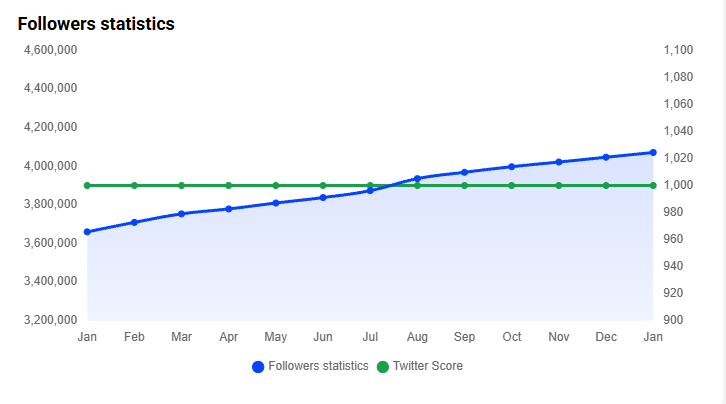
ETH has a maximum TwitterScore - 1.000 (excellent), over 4 million followers, the account was created in January 2014. Below are 4 main tabs - Followed Influencers, Followed Projects, Followed Venture Capitals, and Tier-1 vc.
In the main section, you see which influential people, projects, and venture capital funds are following the account. Below are graphs of follower growth and account rating changes.
But with ETH, it's already clear that the project is one of the largest. Let's analyze smaller projects. For example, Ether.fi.
We are interested in large funds, so-called tier1 and tier2, among the followers.
How to analyze funds?
There are 2 types of funds: Tier-1 and Tier-2.
Tier-1 - Top Funds
This group includes the world's largest and most authoritative funds. Their resources amount to trillions, and their history spans decades.
There aren't many such players in the general database - only about 30–32 funds. For example, Andreessen Horowitz (a16z), Paradigm, Binance Labs, Coinbase Ventures, Sequoia Capital.
Such a fund following a project on Twitter or making an early investment is the strongest signal of a startup's quality and reliability.
Tier-2 - The Second Tier
These companies are also very large. Their capital volume is measured in hundreds of millions, sometimes billions of dollars.
They closely monitor the market. Often their strategy is to enter projects following Tier-1 leaders.
Unfortunately, data on funds is hidden in the free version. But we have a subscription, as it is needed for market analysis, so we can see how it works.

Here, 6 Tier-1 funds and 4 Tier-2 funds are involved. This is an ecosystem project with the participation of ETH, Cosmos, Aptos, and Polkadot. Having followers from official ecosystem accounts is an important indicator that the project has technological value for a specific network.
Why isn't the project empty from an analytics standpoint? Because it's a decentralized liquid staking protocol on Ethereum. Stakers retain control over their keys.
Conclusion: Unlike the очередных новых блокчейнов (the market has long been oversaturated with them), which lead to soft scams and are not needed by the community, this project is a useful application with strong support from funds and the community.
Solana funds:

We see here, for example, a16z. This is the largest fund in the world and they hold coins like SOL, XRP, SUI, and others. However, it is important to understand at what stage of the crypto project's development they entered the investments.
What are the signs of a weak project?
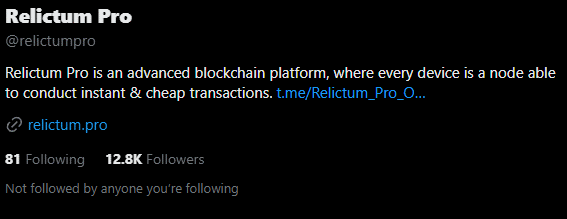
For comparison, let's open a project that is trailing at the end of the CoinMarketCap list. Apart from some followers, we see a zero rating.

Whereas on regular Twitter/X we would see 12k followers.
In the crypto industry, the external shell and a beautifully working project website are often just a sales narrative that can hide the absence of real value and technological applicability of the project.
Even if a website looks tasty and wonderful, it might just be beautiful packaging for a soft scam aimed at gradually decreasing the coin's value and scamming investors over the long run.

Conclusion: A large number of followers against the backdrop of a beautiful website often turns out to be inflated. This is easily checked by the absence of the project's connections with real players in the crypto market.
If a project's TwitterScore is less than 100, it holds little to no interest for a serious investor.
What is Friendship History?
Friendship History is a TwitterScore section that shows the chronology of an account's follows and unfollows. The tool allows you to identify insiders through early followers, analyze investments based on Tier-1 fund activity, conduct an audit of a project's connections, and track loss of interest through unfollows.
Filters by account types help cut through the noise and find alpha. This provides an opportunity to verify a project's real significance through the dynamics of its social connections.

Tracking unfollows also serves as a detector of negative signals, warning of the loss of interest from the professional community.
To find insights, you can rewind the Friendship History to the very beginning to find the project's very first followers. If among the first followers there are people with high personal ratings, they may possess insider information. You can go to their profiles and track what else they follow at early stages.
All analysis tools
Now let's briefly review all the tools.

Smart Followers– here you can filter followers by type (projects, funds, media) or even by affiliation with specific investments.Charts for 365 days– graphs of follower growth. Too steep values may signal bot inflation.Coin details️- here is just the price and coin info.Investors- a list of confirmed funds and private investors on Twitter who have funded this project.Team- a list of individuals and employees who are officially part of the organization.Invest Portfolio- displays projects that the analyzed account (or fund) itself has invested its funds in.
Now let's see what other sections are inside TwitterScore and what they are for.
API for developers
Paid section. The API is intended for developers and analysts, allowing integration of TwitterScore data into their own tools.
Trending and alpha search
One of the most interesting sections for finding alpha projects is Trending. Here, accounts with the fastest rating growth over 3 days, a week, and a month are displayed.

Airdrop
In the Airdrop section, you can find accounts that are highly likely planning to distribute tokens among early users.
Top-100
Top-100 is a rating of the 100 most popular crypto accounts on Twitter by number of followers.

Alpha - a function for searching promising projects, allowing you to track which accounts and projects interest people associated with top crypto funds.
Coins - a section for analyzing coin accounts with filters for followers from funds and rating range.

Watchlist - a watchlist that allows you to track added accounts in a convenient format. After registration, you can see the dynamics of audience growth or decline, engagement level, and posting activity. This is especially useful if you follow influencers whose signals you use for trading or finding new airdrops.
And finally, the Researched section shows the accounts that users search for most often on Twitter.
Is the service free?
Yes, it's free. TwitterScore offers a free version with basic functions such as account evaluation and trending lists. However, advanced tools (mass checks, history, wallet tracking) are only available in the paid Pro subscription from $15–$29 per month with a trial period.
What are the disadvantages and risks?
The free version of TwitterScore provides limited data. For deep analysis - viewing all Smart Followers, follow history, and advanced filters - a paid subscription is needed. It's important to understand that the service is only an indicator of social attention, not a guarantee of success. You cannot make decisions based on just one indicator!
Another risk is that some even well-known project founders have a scenario only for making money and move from one failed project to another.
Summary and conclusions
TwitterScore is excellent for finding early trends. You can watch which accounts are growing sharply and analyze their content. For example, you might notice that several influencers are discussing the same coin. After that, you go to DropsTab and check the fundamentals, tokenomics, roadmap, and vestings. And on CoinGlass you can freely view open interest indicators and build your own aggregated charts. I.e., it's important to use several tools for analysis.
TwitterScore shows what the market is talking about and helps you stay one step ahead if you know how to analyze trends.
It's important to understand that the free version provides limited access. For full analytics, including viewing top followers, follow history, and advanced filters, you usually need a PRO plan!
And remember, like any social measurement tool, TwitterScore is a black mirror. Growth on social media does not always mean a project has real value. Hype can be temporary. Therefore, always analyze data comprehensively.
Whether to use TwitterScore or choose another crypto service from the rating is, as always, up to you. Happy trading! Your editor - Maxim Anisimov for bytwork.com.
Disclaimer: All information provided in this article should not be taken as financial advice. The article was created for educational purposes. Never invest more than you can afford to lose, and seek advice only from your personal financial advisor.


