Pendle Finance – overview and guide to yield in crypto without trading

In many DeFi protocols, APY can swing from 15% to 6% overnight. Or your assets just sit idle. Pendle solves this by letting you lock in yield while accumulating points and rewards several times faster than usual. The protocol literally splits your asset into two independent parts, addressing investors’ key pain points.
Below we’ll walk you through step by step: how to open a position on Pendle Finance, how to lock in yield, and how to boost that fixed yield even further. We’ll also cover the risks.
Protocol Overview
So, here we have Pendle Finance – a protocol that lets you lock in yield and splits assets into yield tokens and principal tokens.
Asset Splitting
A very simple explanation of how the protocol works, using an apple tree metaphor. An apple tree costs $100 and produces $10 worth of apples each year (10% APR). If you split the tree into two assets – the tree itself and the future harvest – the tree without apples would be worth $90, and the rights to the harvest $10.

In Pendle’s terms, the tree is the principal token (PT) and the harvest is the yield (YT). This concept is crucial for understanding how yield tokens work on the platform.
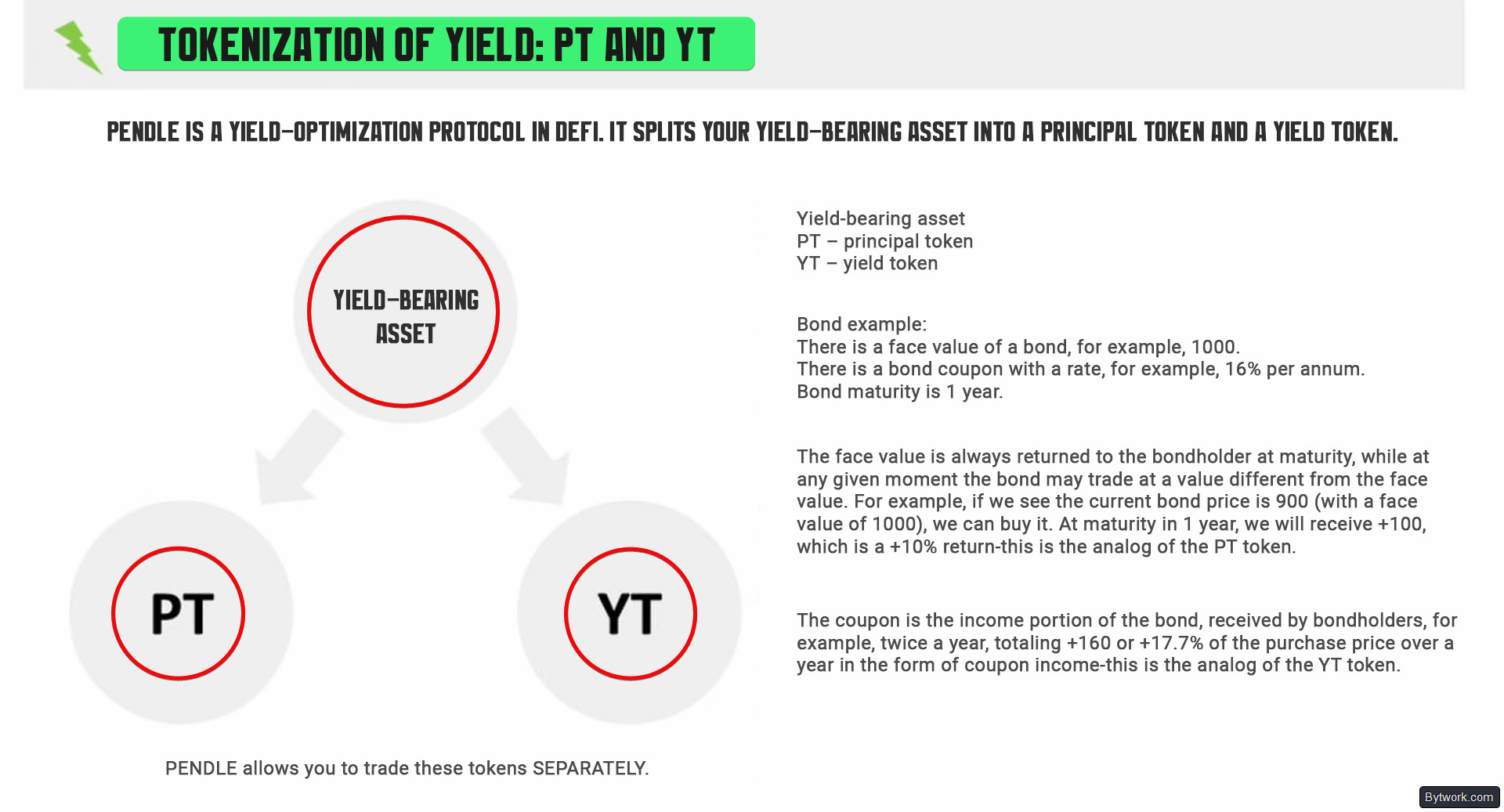
PT tokens have a maturity date, and the maturity varies by asset.
Maturity Dates & Yield
Maturity (expiry) is a pre‑fixed date when the PT token ceases to exist, and you get back the principal amount of the asset plus the locked fixed yield determined at the time of purchase.
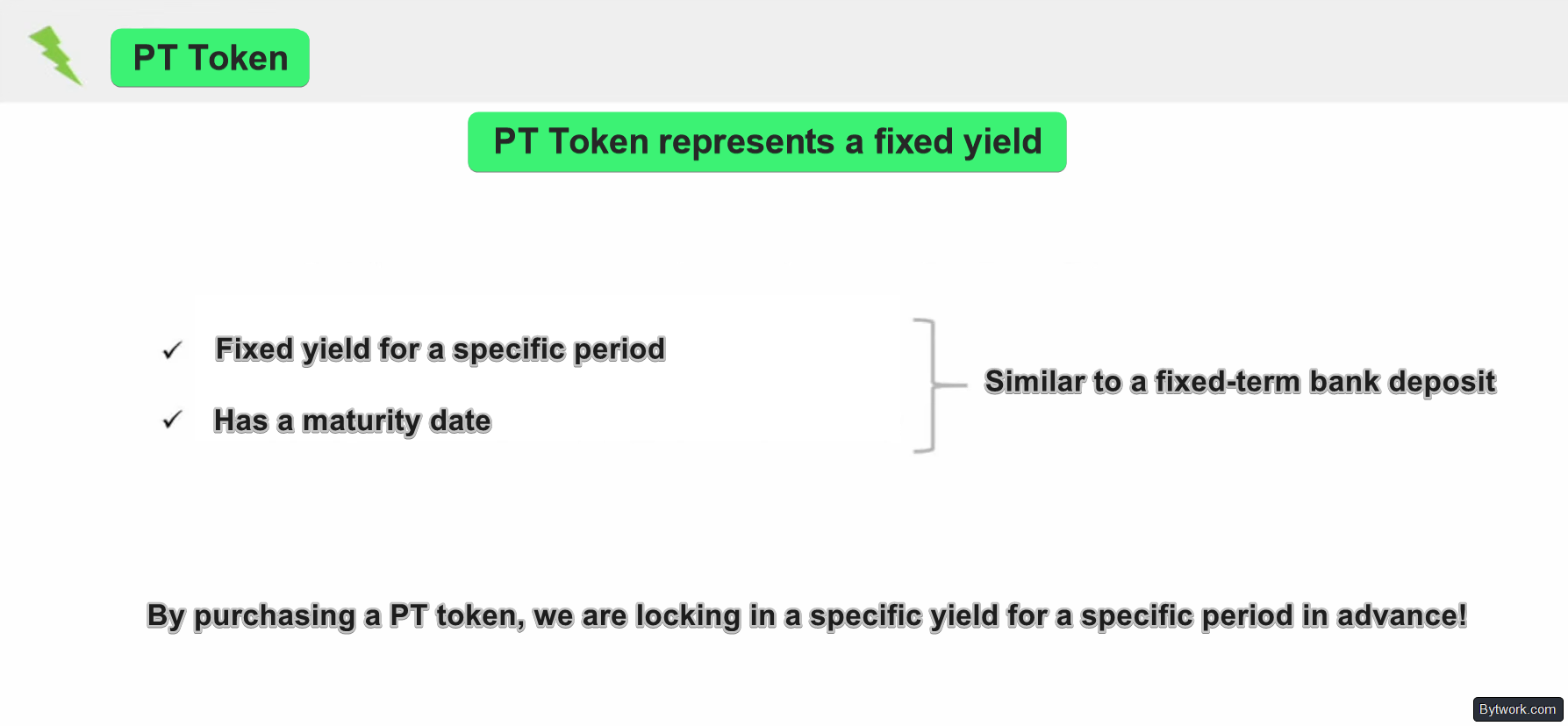
Imagine a one‑year bond with a face value of $1,000 that you buy at a discount for $900. On the maturity date, you are guaranteed to receive the full face value ($1,000), earning $100 from the principal’s appreciation. PT locks in this base value.
YT (Yield Token), on the other hand, is like coupon payments. If that bond has a 16% annual yield, it would generate another $160 in interest. YT separates that future income, allowing it to be traded independently of the principal. But note: unlike a traditional bond with a fixed coupon, the yield of YT in DeFi protocols depends on the underlying asset’s market rate.
Liquidity changes as maturity approaches, creating a cluster of high trading volume for both token types, as shown below.
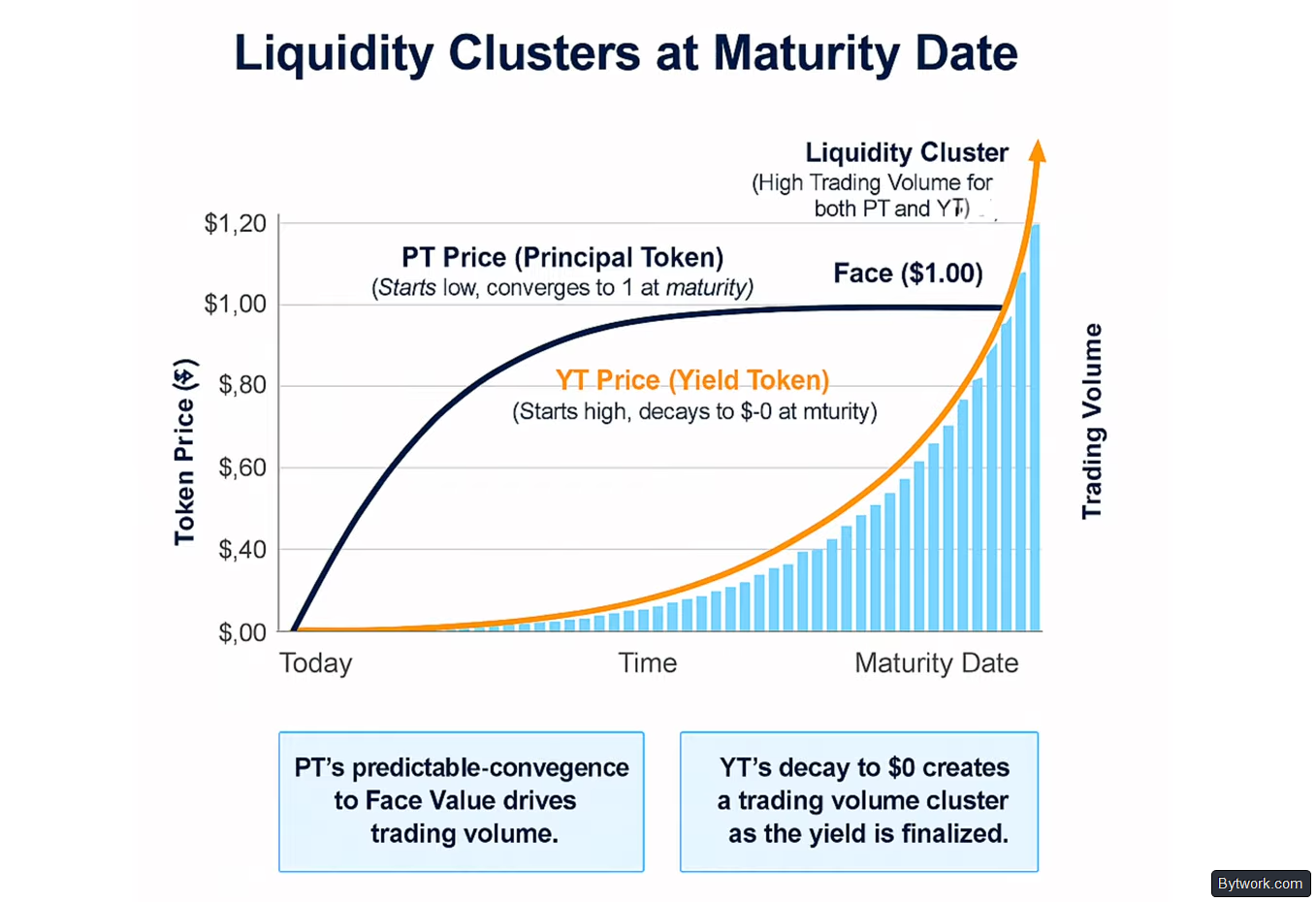
In summary: PT tokens tend toward their nominal value (1:1 redemption) by maturity, providing a fixed yield. Meanwhile, YT tokens grant the right to receive accruals only until expiry. On maturity day, YT becomes worthless (decays to zero), because the rights to future yield no longer exist. It’s because of this mechanism that liquidity concentrates in both segments as expiry approaches, forming a high‑volume trading cluster.
Maturity dates are often set quarterly (end of March, June, September, December), but for newer assets like restaking tokens, they may be shorter to preserve flexibility.
Now let’s move to hands‑on interaction with the protocol.
Real‑Market Example: sUSDai
Let’s look at an asset. In our case, sUSDai matures in 133 days. So in 133 days we will receive a yield of 9.72%.
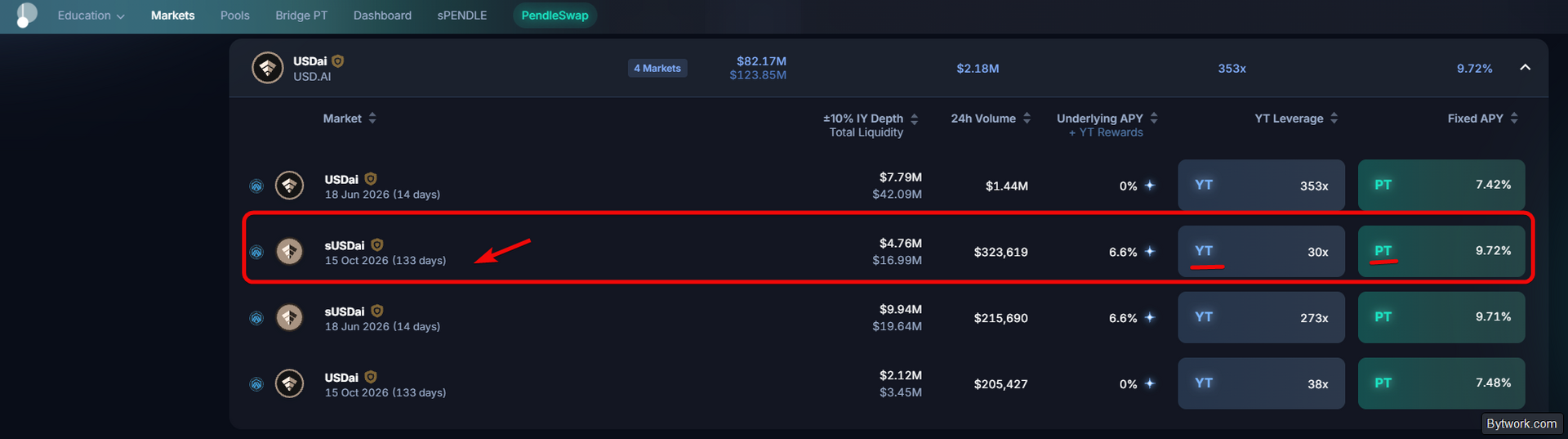
As for the yield YT token, it carries more risk. Therefore, we will focus primarily on the principal token, the fixed yield, and how to amplify that fixed yield.
First, let’s examine the asset.
Analyzing the USDai Asset
Before entering any position on Pendle, you must research the asset, because the protocol may contain highly questionable and very risky assets.
For example, USDai is a decentralized stablecoin backed by real‑world assets and aiming for parity with the US dollar. Given its high market cap and 4,000+ holders, this instrument might look promising.
To independently assess an asset’s reliability, you should visit its official website, check market data on CoinMarketCap, and analyze trading dynamics via Dune Analytics. In short, look at who holds the token, proof of reserves, supported networks, liquidity – scrutinise the asset thoroughly before using it on Pendle.
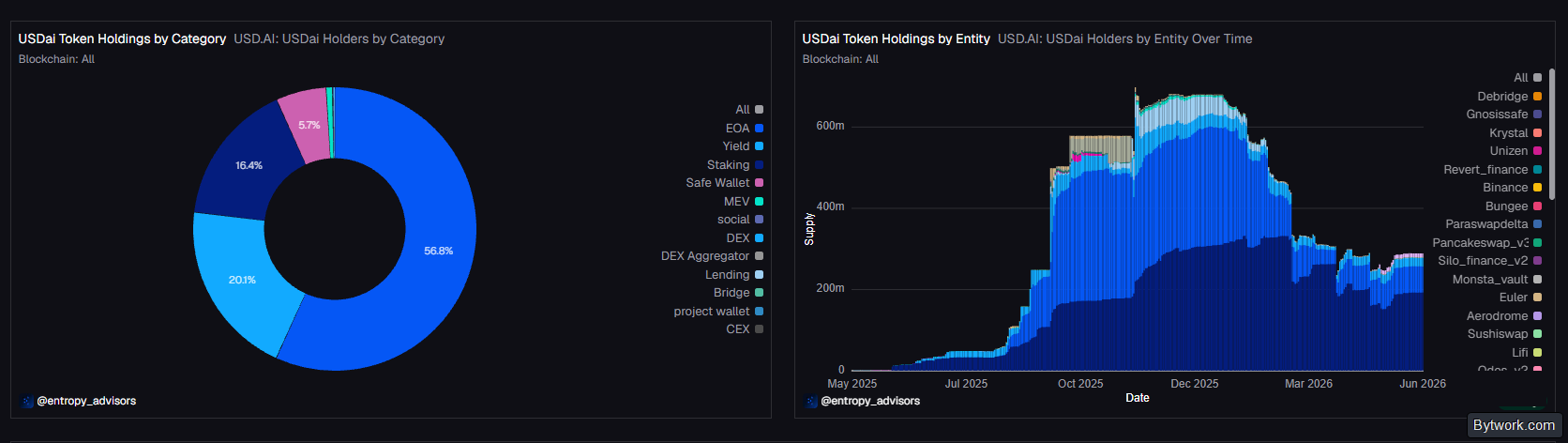
If the checks come back positive, allocate between 5% and 10% of your capital to this asset.
Let’s open a real position, and you’ll see exactly what to do.
Opening a Real Position
First, we connected a MetaMask wallet. For security, it’s wise to have a wallet dedicated to DeFi with a small balance.
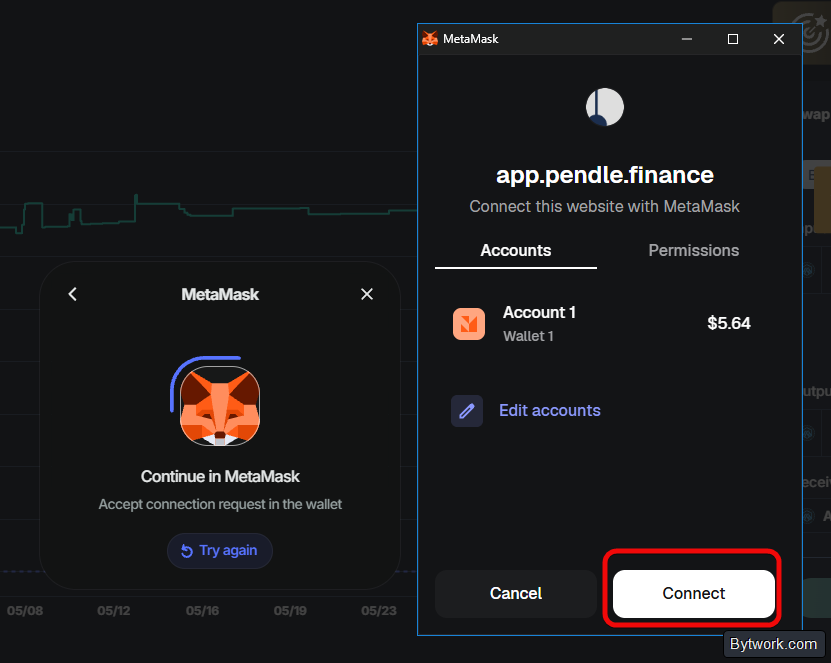
Here you can choose the token you want to use to obtain PT USDai. Since we don’t have any of those tokens yet, we click Pendle Swap.
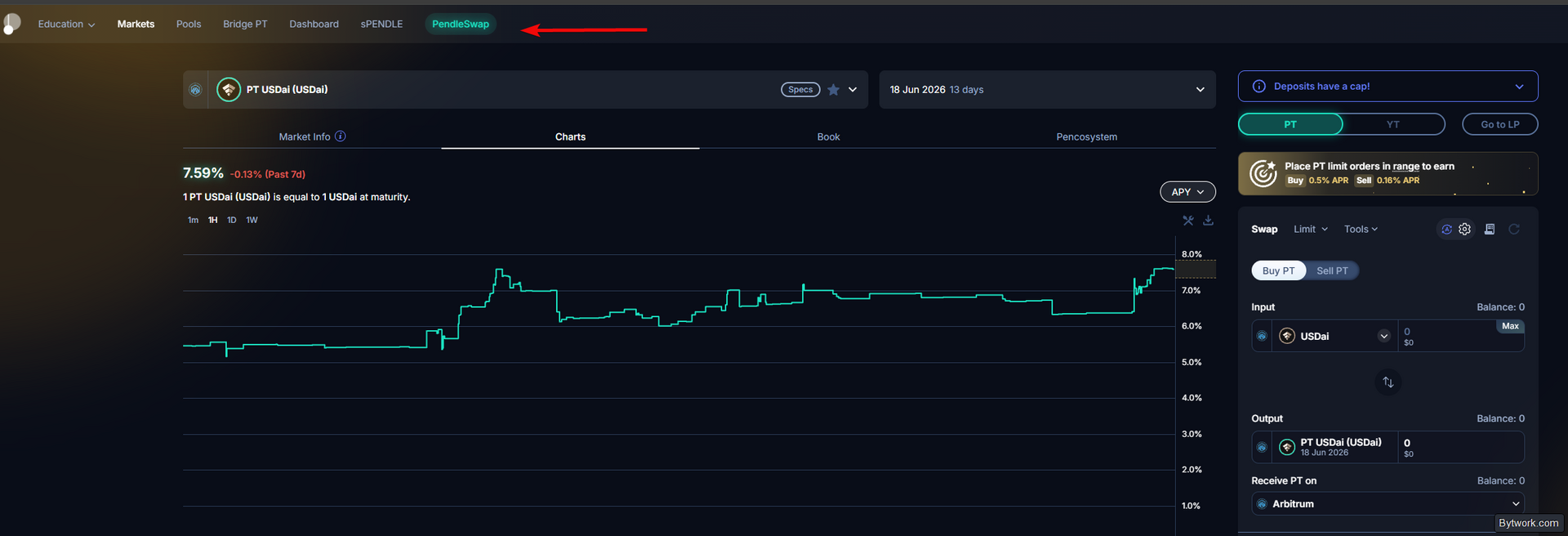
Now the swap interface shows our USDC. Remember, we are working on the Arbitrum network, so you need stablecoins on Arbitrum. In our case, we’re using USDC to buy USDAI.
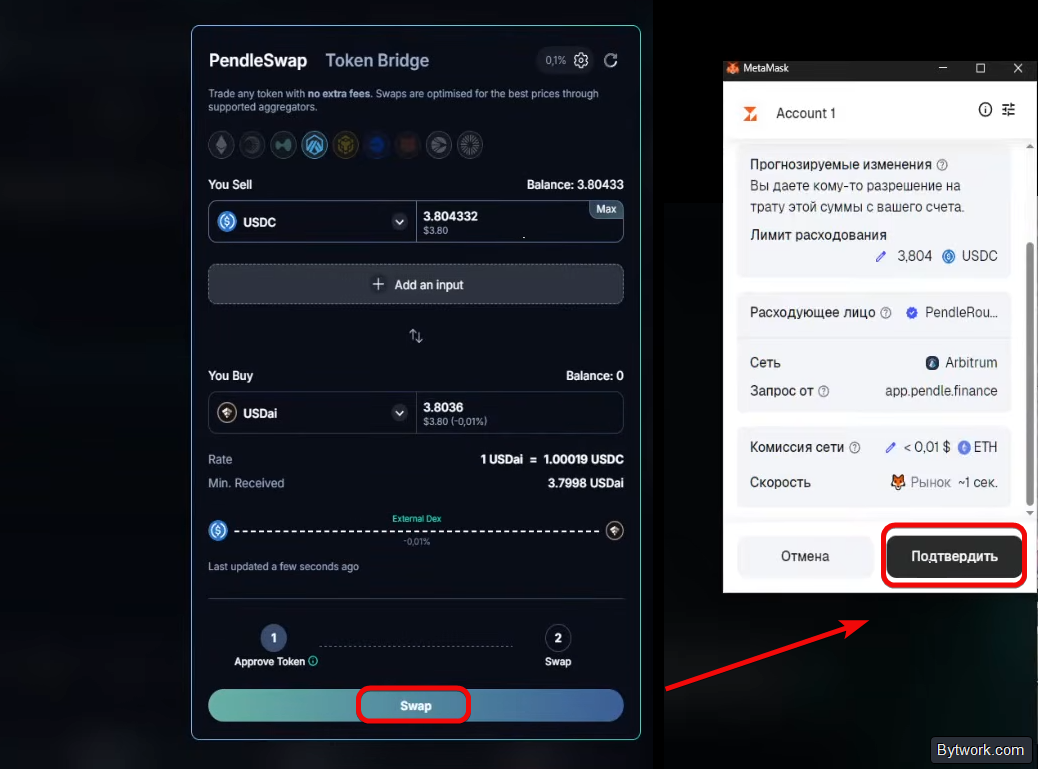
Click Approve, then click Swap.
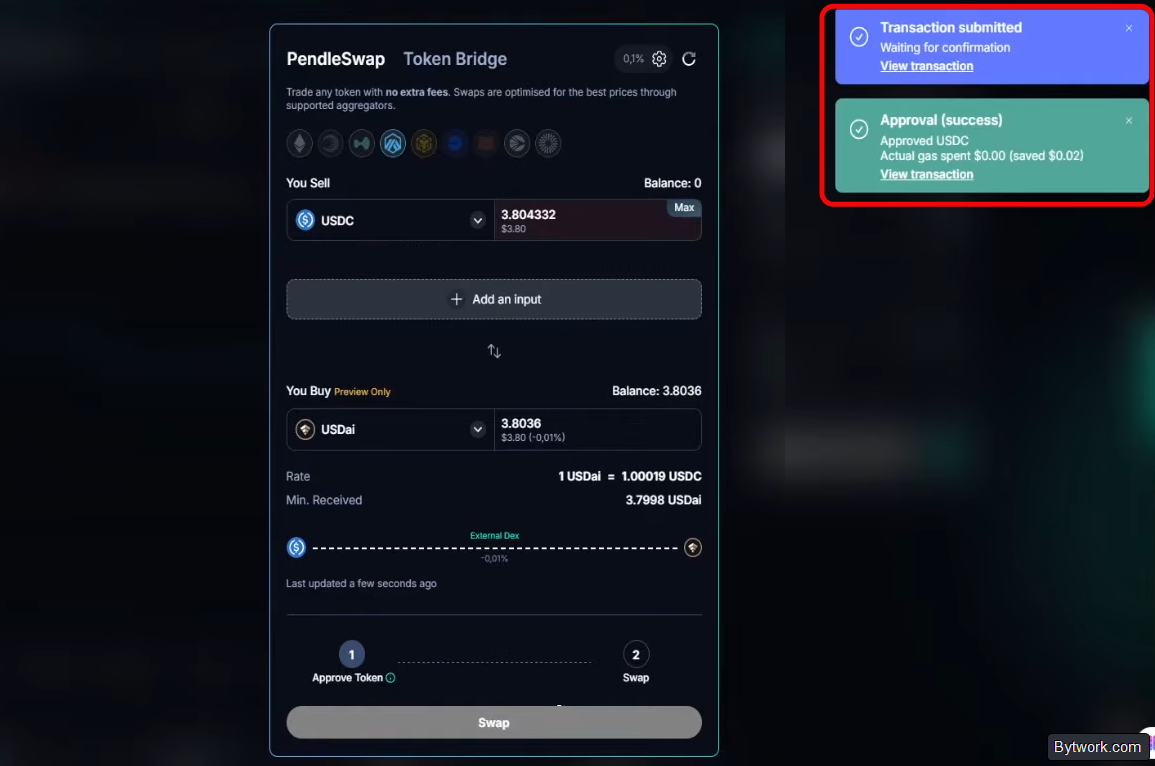
After swapping USDC for USDAI, we can now use this token to buy PT SUSDAI. We select it, swap USDAI for SUSDAI. Click Approve, then Swap and confirm. You’ll see Transaction submitted, swap success.
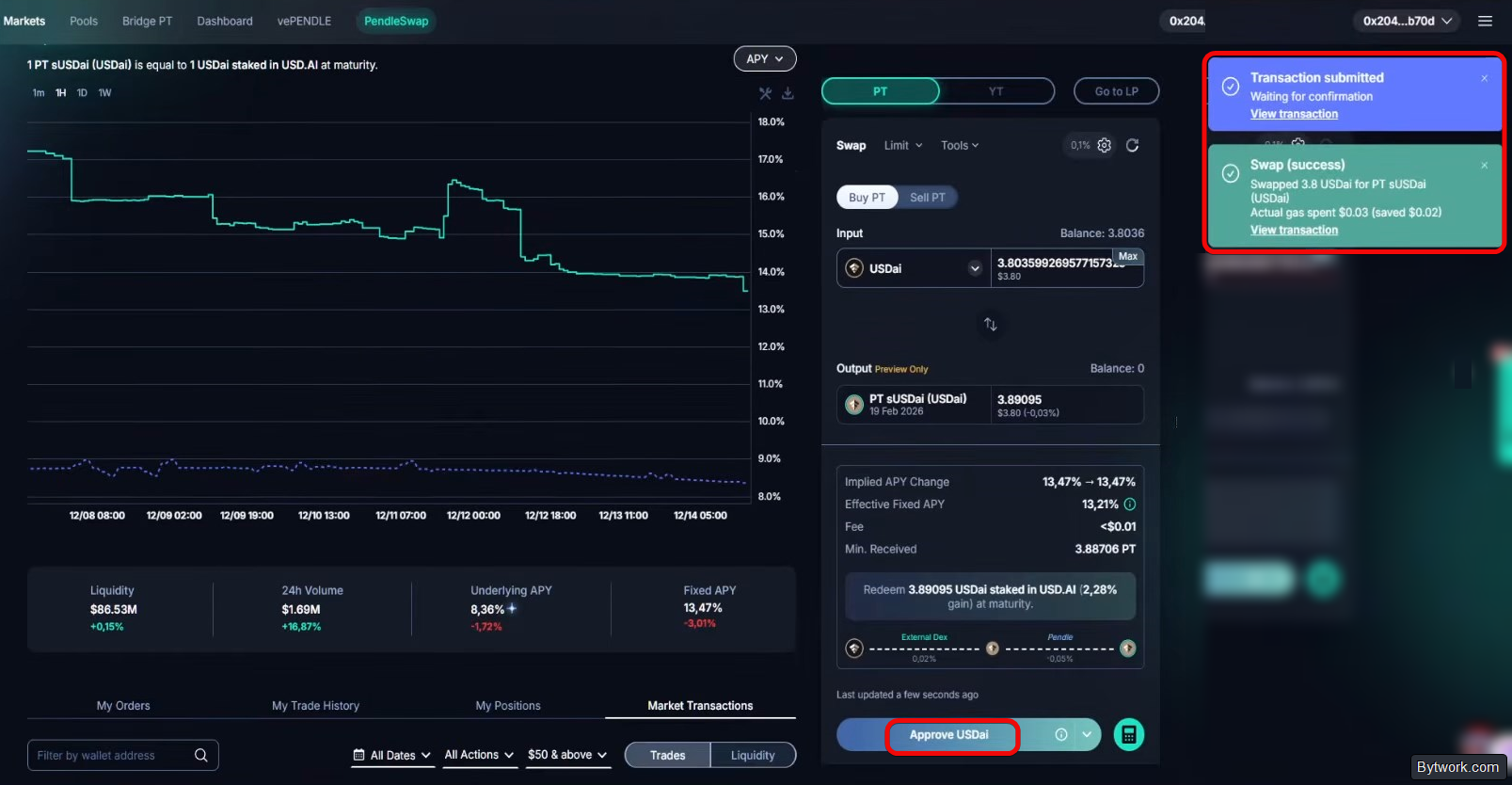
We swapped USDAI for SUSDAI and, consequently, locked in an APY of 13.2% over 66 days until expiry.
Let’s calculate the return using a Google Sheet. Suppose we invest $10,000. Rate 13.2%, term 66 days. After 66 days we earn $238 in net profit.
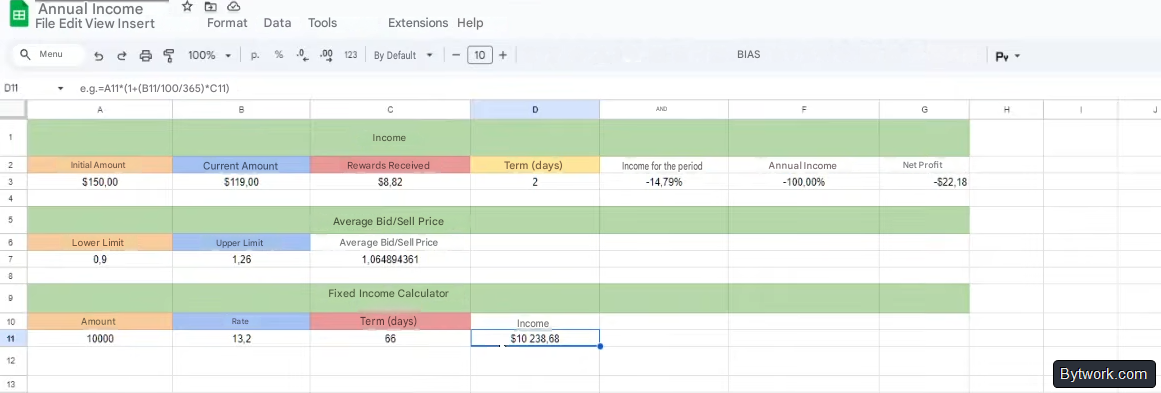
Not bad at all. Put in $10,000, take out $238 – doing nothing, completely passively, and most importantly, fixed.
Now in the “My Positions” section, our open position will be displayed, showing how many days remain until expiry.
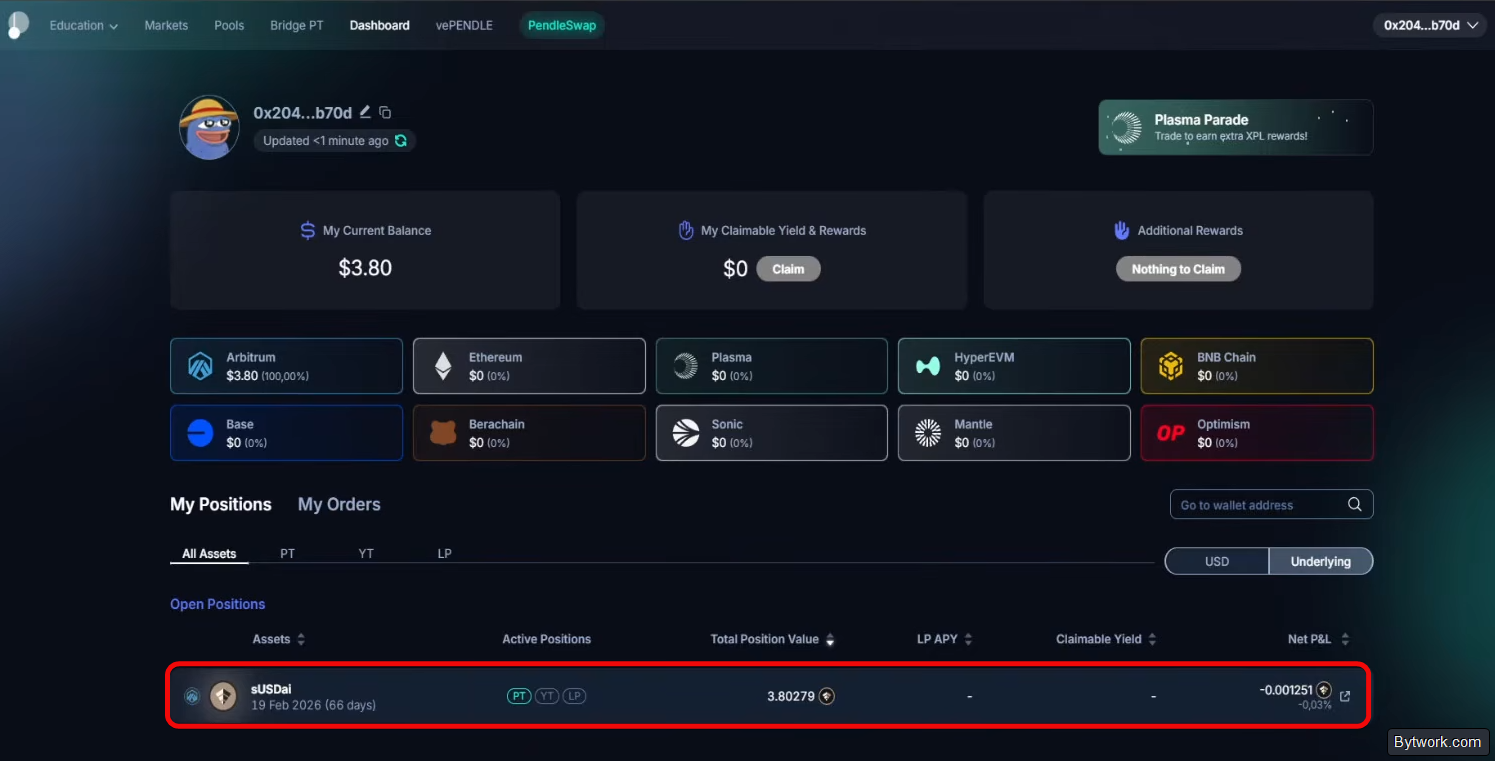
Also, if you hold a Yield Token, you can click the Claim button and collect rewards in this section. Rewards accrue daily, and you can claim them continuously. Not so for the PT token – there we have to wait the full 66 days until maturity.
So what do we do next? We now have SUSDAI in our wallet, and we can employ different strategies with it. For example, looping (leverage) strategies – the multiplier effect. Looping is a DeFi strategy that lets you repeatedly multiply your yield and position size by cyclically reusing collateral.
Yield Enhancement Strategy (Lending & Leverage)
For this strategy, we’ll need a second protocol. For instance, Silo or Compound, which allow using assets as collateral.
The idea: you pay ~4% for a USDC loan on Silo, but earn ~13% fixed yield on Pendle.
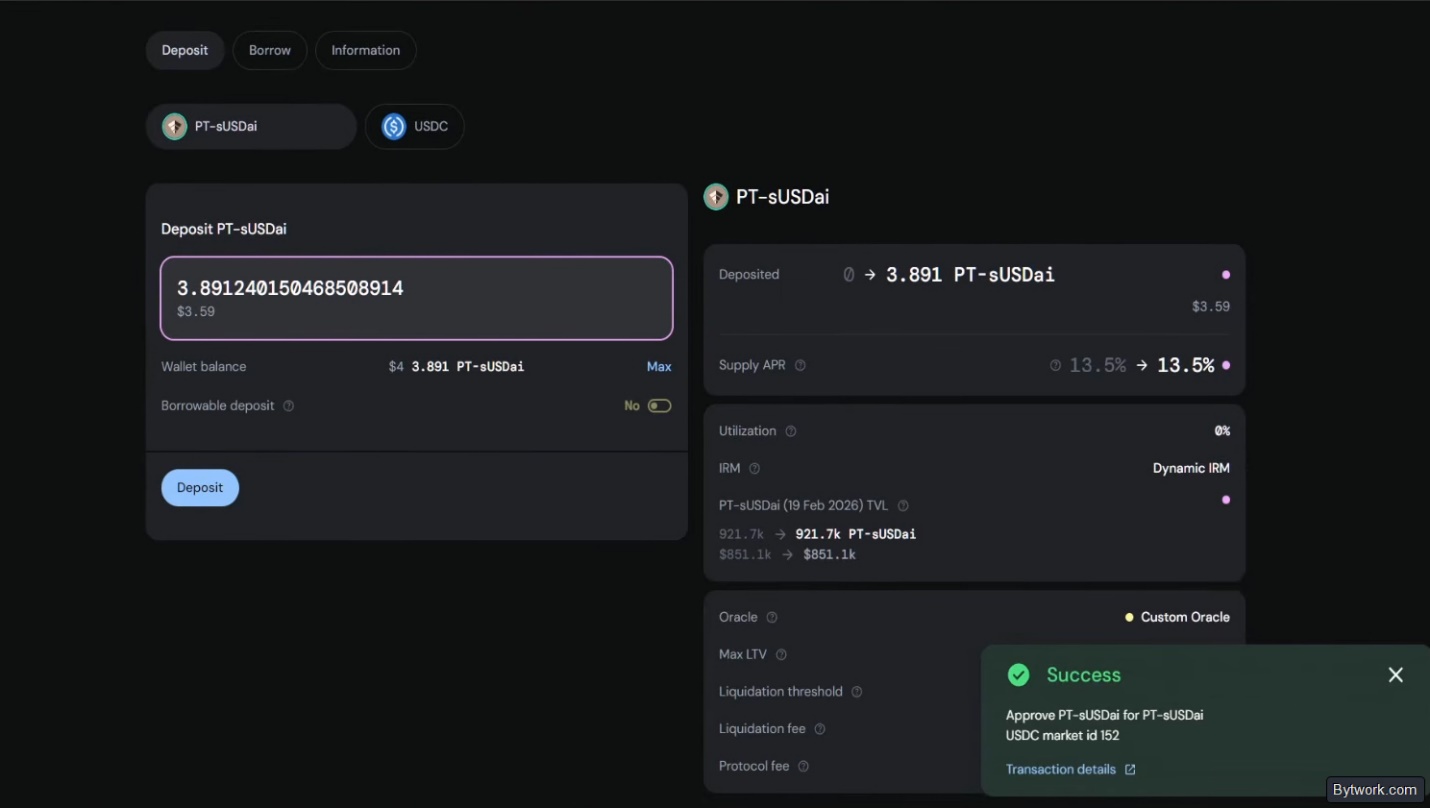
Here’s what we do:
- Go to Silo Finance (Arbitrum network), select the sUSDAI token, execute the transaction, and deposit the token.
- Then take a loan. Click
Borrowand borrow USDC (minimum $100). - Now create leverage. Return to Pendle Finance and use the borrowed USDC to buy even more sUSDAI tokens.
Net result: you pay about 4% for the loan on Silo and receive 13% fixed yield on Pendle Finance. We believe this is a fairly good opportunity, especially since we’re dealing with stables rather than volatile altcoins.
The only caveat: if USDAI loses its $1 peg, then sUSDAI will also suffer. But there are other risks as well, which we’ll cover below.
What Are the Risks?
There are technical and market risks when using the protocol. Pendle is built on top of other yield‑generating protocols (Lido, Ether.fi, Ethena, etc.). A failure or exploit at any underlying layer (smart contract hack, oracle error, or AMM issue) directly threatens positions on Pendle.
The protocol also relies on external oracles – data feed disruptions can lead to incorrect asset pricing and faulty trade execution.
A case in point: the 2024 incident involving the aggregator Penpie, which lost $27M due to an exploit. This illustrates the risk of using third‑party services to boost yields.
The risk of depegging is also critical for stablecoins and liquid staking tokens such as Rocket Pool (rETH). If the peg breaks, PT can fall well below its expected value.
Don’t forget that in a bear market, yield can evaporate overnight. Incentives may stop, and liquidity in pools can dry up. Exiting a position then becomes expensive due to high slippage.
Finally, the tokenisation of points and rewards could theoretically attract regulatory attention, since Pendle treats points as income and charges fees on them.
Having reviewed our experience with the protocol and the risks, let’s summarise.
Conclusion
Pendle gives you a choice: lock in predictable yield with PT, or make a calculated bet with the YT token.
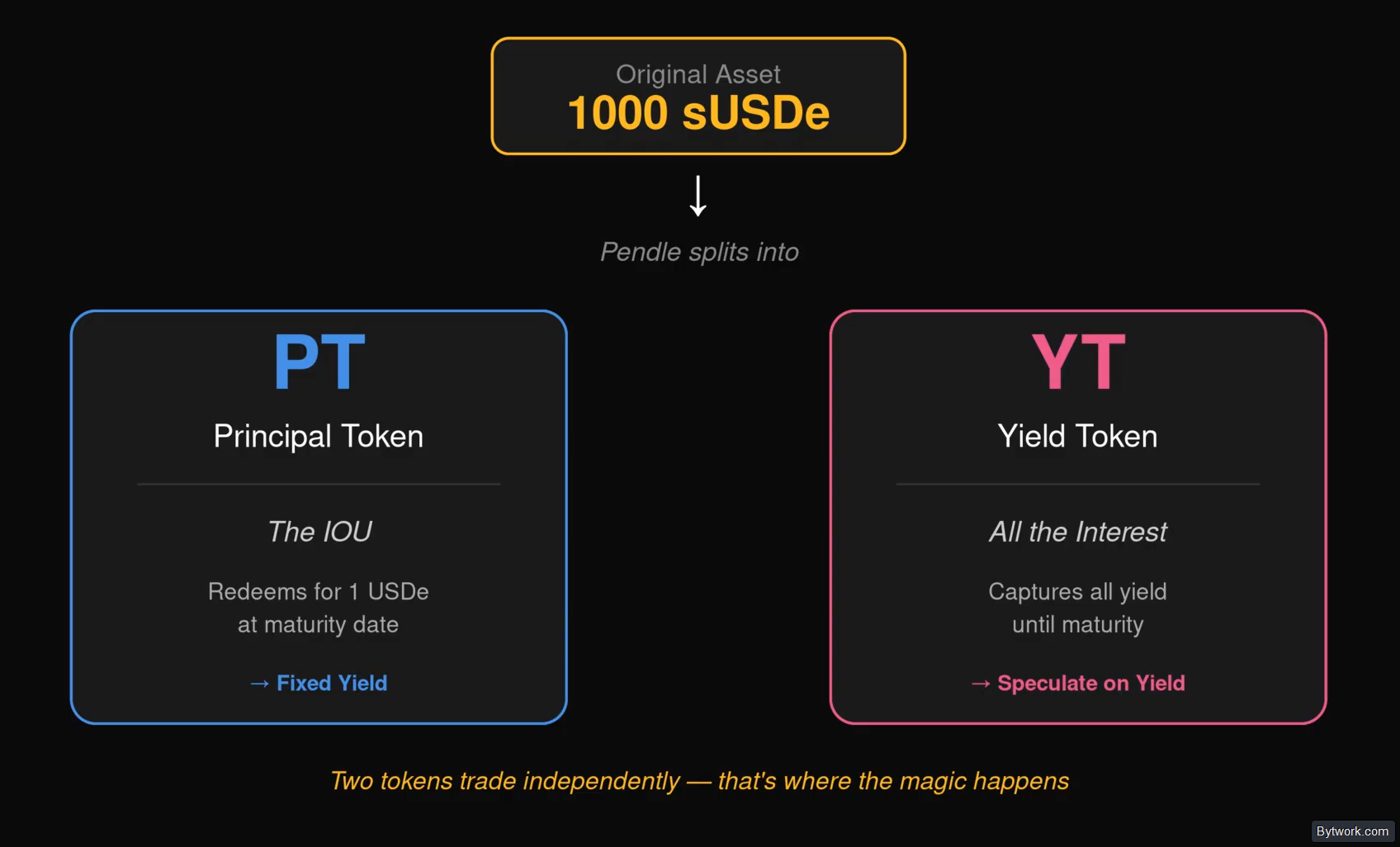
For us, the key is not to chase the highest number, but always to balance yield and risk.
When buying a PT token, you can analyse lending protocols and build an additional looping strategy to boost yield. But everything needs to be calculated – DeFi loves numbers. No way around it.
Many people, for example, don’t understand the conditions and risks, blindly buying YT tokens. They don’t grasp the mechanics: that this asset is guaranteed to go to zero by expiry (see the maturity section). Profit is only possible if the accumulated yield and points exceed the purchase cost of the YT token.
Ultimately, the highlight of this protocol is understanding the separation of assets into yield (YT) and principal (PT) parts. This gives you flexibility: either lock in a guaranteed yield or speculate on its growth. However, in exchange, you take on complex risks that demand constant monitoring and deep analysis.
Stay safe, good luck, and have a great day! Also check out other DeFi protocols. Maxim Anisimov, exclusively for bytwork.com.
Disclaimer: all information provided in this article should not be considered financial advice! The article was created for educational purposes.


